
If you are drawn to the St Gobnait Well pilgrimage in Ballyvourney, you are not simply planning a visit.
You are responding to something.
There is a particular hush that comes over Ballyvourney when you approach the sacred places of Saint Gobnait. It is not the silence of absence, but of presence, the felt nearness of prayer, devotion and old healing. A St Gobnait Well pilgrimage is not simply a visit to a holy well in West Cork. It is an encounter with a living current of Irish spirituality, where the land, the saint and the pilgrim meet.
For many people, Gobnait arrives as a call before she becomes a story. Her name appears more than once. A bee lands where it should not. A season of illness, grief or inner transition opens a longing for protection, clarity or renewal. Then Ballyvourney begins to stir in the imagination. This is often how pilgrimage starts – not as a plan, but as a summons. This is not about seeing more.
It is about seeing differently.
Why the St Gobnait Well pilgrimage still matters
Saint Gobnait is among Ireland’s most beloved women saints, though beloved is too small a word for the devotion she inspires. She is remembered as a healer, an abbess, a guardian of the vulnerable and a woman deeply aligned with the powers of the natural world. Bees are closely associated with her, as are protection, fertility, community wellbeing and the kind of healing that moves through faith, place and right relationship.
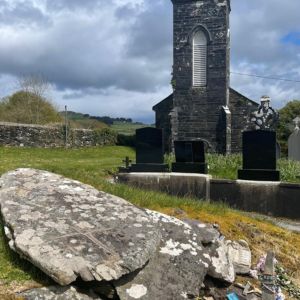
At Ballyvourney in County Cork, her presence is woven through more than one sacred site. There is the holy well, the old church, the graveyard, the stone and local devotional pathways that have carried generations of petition, gratitude and grief. This layering matters. A pilgrimage here does not unfold around one landmark alone. It asks you to enter a whole sacred field.
That is part of what makes this place different from ordinary heritage travel. You are not arriving to consume history. You are stepping into a pattern of prayer that has outlived empires, roads and fashions in belief. The well is not powerful because it is picturesque. It is powerful because people have come here in sincerity, over and over again, bringing what was broken and seeking what might yet be mended.
The sacred landscape around St Gobnait Well
Holy wells in Ireland are rarely separate from the land around them. They belong to a wider conversation between water, stone, trees, memory and ritual movement. St Gobnait’s well is no exception. The landscape of Ballyvourney holds the soft authority of a place long claimed by devotion. Even before you begin any formal rounds or prayers, the body often senses that it has crossed into older ground.
This is why timing and intention matter. Some arrive during a feast day or local pattern day, when communal devotion strengthens the atmosphere. Others come in quieter seasons, when the pilgrimage becomes more private and inward. Neither is better. It depends on what you are being called towards. If you seek shared prayer and continuity with folk practice, a communal time may feel right. If you need solitude, grief work or listening, stillness may serve you more deeply.
The well itself is traditionally associated with healing, blessing and intercession. Water at such sites has never been merely symbolic in Irish spiritual culture. It is a carrier. A threshold. A medium through which prayer is made tangible. Yet reverence matters more than performance. To rush through a ritual because you feel you ought to do it is to miss the point entirely.
How to approach a St Gobnait Well pilgrimage
The most fruitful pilgrimages begin before your feet touch the path. Ask yourself why you are going. Not in a polished or pious way, but honestly. What are you carrying that needs tending? What protection do you seek? What old story is asking to be healed? What offering of thanks needs to be spoken aloud?
You do not need grand language. A true prayer can be as simple as, help me listen. It can be, show me what I am not seeing. It can be, hold my family in this difficult season. Saint sites in Ireland respond well to sincerity. They do not require spiritual theatre.
When you arrive, slow yourself. Let the first moments be about attunement rather than activity. Notice the weather, the sound of water, the feel of the ground underfoot. Pilgrimage is partly about re-entering a more ancient pace, where meaning is not forced but received. If you are undertaking rounds, prayers or other acts of devotion, do them with steadiness. If you are sitting in silence, let that too be a complete act.
Some pilgrims bring a ribbon, a prayer card, or a small private intention held in the heart rather than in the hand. Others leave nothing physical at all, understanding that the cleanest offering may be their presence and respect. This is usually the wiser path. Sacred sites are not improved by accumulation. They are honoured by care.
What you may feel at the well
Not every pilgrimage brings tears, visions or unmistakable signs. Sometimes the gift is subtler. A loosening in the chest. A sense of being accompanied. A quiet certainty about the next step. Sometimes what arrives is discomfort, especially if the place begins to touch grief you have kept at bay. This too can be holy.
There is a temptation among modern seekers to measure spiritual experiences by intensity. But St Gobnait’s places often work in another way. Their medicine can be humble, steady and practical. You may leave with less drama than expected and more truth than you came for.
Saint Gobnait, bees and the work of healing
Gobnait’s association with bees is more than charming folklore. In Irish tradition, bees carry profound symbolic weight. They speak of ordered community, sweetness earned through labour, protection of the hive and communication between worlds. In stories of Gobnait, bees are said to defend, to warn and to act almost as emissaries of sacred power.
This makes her a particularly potent saint for people moving through exhaustion, fragmentation or loss of belonging. The St Gobnait Well pilgrimage can become a prayer for right order in the soul. For many, it is not only about physical healing, though that may be part of it. It is also about restoring inner coherence – bringing the scattered parts of the self back into relation.
For those in midlife or later years, this can be especially resonant. There comes a stage when healing is no longer understood as fixing what is wrong, but as returning to what is essential. Gobnait’s energy often meets pilgrims there. Not with spectacle, but with steadiness, clarity and fierce care.
Pilgrimage or visit – the difference matters
Many people travel through Ireland and stop at holy wells as part of a wider itinerary. There is nothing wrong with that. Sacred places can work gently even through brief contact. But pilgrimage asks more of you than a visit does.
A visit says, I came to see. A pilgrimage says, I came to be changed.
That difference shapes everything. It affects how long you stay, how you prepare, how you pray and what you do afterwards. If Ballyvourney is approached as a box to tick, the experience may remain lovely but shallow. If it is approached as a threshold, it can open surprising inner territory.
This is why guided sacred travel can matter for some pilgrims. The right guide does not stand between you and the place. They help you meet it more truthfully. At Ancient Spiritual Tours Ireland, that is the heart of the work – not tourism dressed in spiritual language, but land-rooted pilgrimage that honours the old ways without reducing them to performance. This is exactly why we guide small, pilgrimage-led journeys across Ireland.
Not to show you more places, but to help you meet them properly.
Because without context, many of these sites remain just landmarks.
With the right approach, they become something else entirely.
After the well – carrying the blessing home
The real pilgrimage often begins after you leave. Sacred sites can rearrange something quietly, and the full meaning may not emerge until days or weeks later. A prayer spoken at the well may echo back in unexpected form. A decision becomes clearer. A burden feels lighter. Or a deeper layer of the journey begins asking for your attention.
It helps to make room for that. Journal if that is your way. Light a candle when you return home. Keep a small practice of prayer, gratitude or listening in honour of what was stirred. A pilgrimage that ends in the car park has barely begun.
If you feel drawn to St Gobnait’s well, trust that instinct.
Because this kind of pull is rarely about curiosity.
It’s recognition.
And the difference between reading about this place and walking it, with the right awareness, is everything.