Some places in Ireland do not feel visited so much as remembered. You stand on a wind-cut hill, or before a stone worn smooth by centuries of prayer, and something older than language stirs. A sacred sites Ireland tour, when held with reverence, is not a scenic circuit of famous landmarks. It is a meeting with a living land – and perhaps with the part of you that has been waiting to return.
That distinction matters. Ireland has no shortage of tour buses, polished itineraries and quick photographs taken beneath ancient skies. Yet sacred travel asks for a different pace and a different posture. It asks you to arrive not as a consumer, but as a listener. Not to conquer a list, but to enter a relationship.
What makes a sacred sites Ireland tour different
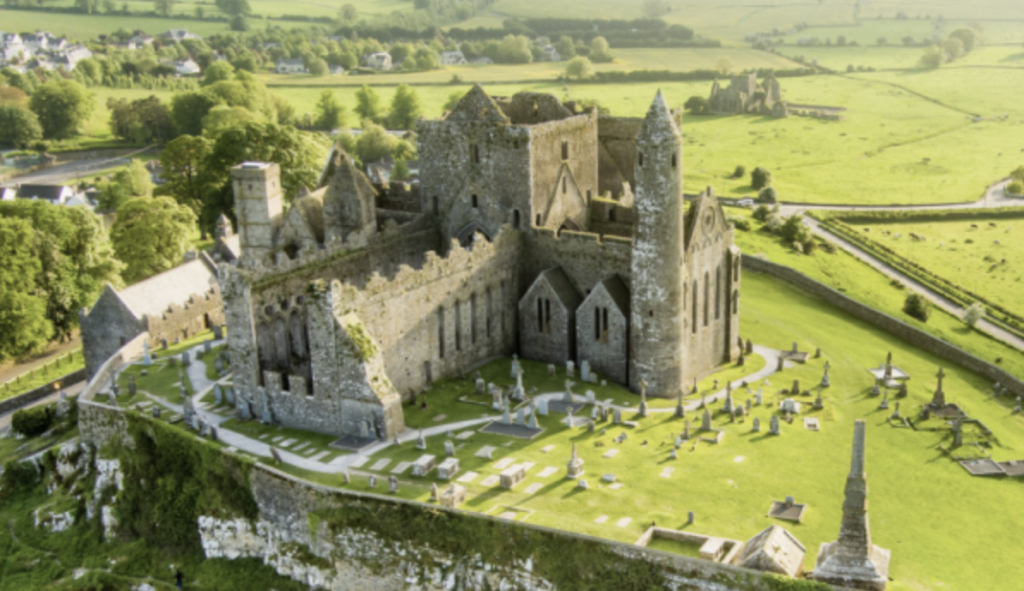
A true pilgrimage through Ireland’s holy places is shaped by presence. The land here is layered with myth, monastic devotion, pre-Christian ritual, holy wells, megalithic tombs, mountain shrines and sites where the veil has long been felt as thin. These are not simply historical curiosities. They remain spiritually charged for many who come with humility.
That does not mean every stone circle or ruined abbey will affect every traveller in the same way. Some people feel called by ancient goddess sites. Others are moved most deeply by monastic ruins, saints’ paths or places tied to grief, healing and ancestral prayer. A meaningful journey leaves room for that difference. It does not force a single interpretation onto the land.
This is why the best sacred travel in Ireland is guided with both knowledge and discernment. You want more than dates and legends recited on cue. You want context, yes, but also an understanding of how to approach a place without flattening it into spectacle. The old sites can hold story, beauty and mystery all at once. They deserve to be met that way.
The land is not a backdrop
One of the great misunderstandings in modern travel is the idea that landscape is scenery. In Ireland, sacred places are inseparable from the land that holds them. A hill is not merely a hill if it has long been linked with sovereignty rites or seasonal fire. A spring is not merely water if generations have come there for blessing, healing and petition. A cave, an island, a hawthorn, a standing stone – each may belong to a web of memory that is spiritual as much as geographical.
So a sacred sites Ireland tour should never feel rushed from one stop to the next. The road between places matters. The weather matters. The stories carried by local people matter. Even silence matters. Often it is in the unplanned moments – mist lifting from a valley, a prayer spoken softly at a holy well, the sound of a drum against Atlantic wind – that the journey begins to work on you.
That is also why small groups and carefully held spaces are often more powerful than large-scale travel. Intimacy allows for depth. It allows for ritual. It allows each person to feel their own response without having to perform it for the crowd.
Sacred sites in Ireland are not all the same
Some travellers arrive expecting one kind of spirituality and are surprised by how many streams run through this island. Ireland’s sacred geography is plural. The ancient ceremonial landscapes linked with the Celtic calendar carry a different atmosphere from early Christian monastic settlements. Holy wells often feel different again – intimate, healing, devotional, close to the body and the heart.
Then there are places shaped by mythic memory, where story and land seem braided together so tightly that one cannot be understood without the other. Such places often resist neat explanation. They are felt more than decoded.
This is where a thoughtful guide becomes invaluable. The point is not to package every site into a single spiritual system. It is to honour what is distinct. A ceremony that belongs at Bealtaine may not be right for Samhain. A mountain asks for something different from a shoreline. A site associated with ancestral grief should not be approached in the same spirit as one associated with blessing or initiation.
Pilgrimage deepens when the journey is seasonally and spiritually attuned rather than stitched together for convenience.
Why people are seeking pilgrimage now
Many who feel called to Ireland are not really looking for a holiday, even if they would not phrase it that way at first. They are tired of noise. Tired of surfaces. Tired of experiences designed to be consumed and forgotten. What they long for is contact – with land, with spirit, with ancestry, with meaning that can still be felt in the body after they return home.
For some, the call is ancestral. They want to walk where their people once walked, even if the paper trail is broken. For others, the pull is mythic or devotional. Ireland lives in their imagination as a place of old wisdom, sacred feminine currents, seasonal rites, healing wells and songs that survived conquest. Others come in a season of change – after loss, divorce, burnout, illness, awakening – and need a threshold place in which to listen for what comes next.
A pilgrimage can hold all of that. But only if it remains a pilgrimage. Once it becomes performative, hurried or overly sanitised, something essential slips away.
How to choose the right sacred sites Ireland tour
If you are discerning which journey is right for you, look first at the spiritual integrity behind it. Ask yourself whether the experience feels rooted in the land itself or merely decorated with mystical language. There is a difference, and most seekers can feel it.
A trustworthy pilgrimage experience will usually reveal its philosophy quite clearly. It will honour Irish tradition without pretending to offer ownership over it. It will be led by people who understand place beyond the brochure version. It will make space for ritual, reflection and relationship, not just information. It will also respect the complexity of these traditions. Ireland’s sacred inheritance is rich, but it is not there to be reduced to fantasy.
Practical details matter too, though they are not the soul of the journey. Smaller groups often create safer and more spacious containers. Bespoke routes can be especially meaningful if you are travelling with a clear intention – grief work, ancestral reconnection, creative renewal or a personal rite of passage. Seasonal pilgrimages can be especially potent because they align your experience with the old turning points of the Celtic year.
At Ancient Spiritual Tours Ireland, this is the heart of the work – journeys shaped not as tourism, but as ceremonial encounter with Ireland’s ancient spiritual landscape.
What transformation really looks like
People sometimes imagine spiritual travel as dramatic revelation. That can happen, but more often the change is quieter and more enduring. You begin to notice that your breathing has slowed. You weep unexpectedly at a well or shrine and do not need to explain why. You feel less scattered. More porous. More honest.
A good pilgrimage does not manufacture these moments. It prepares the ground for them. Through story, place, ritual, music, prayer, healing traditions and time in the elements, the outer journey creates conditions for an inner one. The land does not fix you. It meets you. Sometimes that is enough to begin a profound reordering.
It is worth saying that sacred travel is not always gentle. Sometimes a site will stir grief before comfort, or expose disconnection before healing. That is not a failure of the journey. It can be part of its truth. The key is to travel in a way that is held, respectful and spacious enough to let what rises be witnessed rather than rushed away.
A homecoming, not a performance
There is a particular dignity in approaching Ireland’s holy places without trying to extract something from them. Not every site will offer a grand experience. Not every prayer will receive an immediate answer. Yet the practice of showing up with reverence changes the traveller.
That may be the deepest gift of a sacred sites Ireland tour. It teaches another way of moving through the world. More slowly. More relationally. More awake to the old presence that still lives in stone, water, fire and story.
If you feel the call, trust the quality of it. Let it lead you beyond sightseeing and into listening. Ireland does not need to impress you. It only asks that you come willing to remember.