Tracing Your Irish Roots Through Land, Story and Sacred Sites
For many in the US, Canada and Australia, the pull toward Ireland is not just tourism. It is something deeper. A feeling in the chest. A question that will not go away.
Where did I come from?
As someone who has guided diaspora visitors through ancestral research in Ireland, sacred landscapes, parish archives and family townlands for over a decade, I can tell you this. Tracing your Irish roots is not only about names on a page. It is about restoring belonging.
And when done properly, it becomes ancestral healing.
How to Begin Your Irish Genealogy Research before you Travel
Before you land in Dublin or Shannon, preparation matters.
Gather:
Full names of grandparents and great grandparents
Approximate birth years
Known counties or parishes
Religion if known
Emigration dates
Family stories, even the strange ones
Online platforms like
– National Archives of Ireland
– IrishGenealogy.ie
– Griffith’s Valuation
– Ask About Ireland
– Ancestry
– Findmypast
These are essential starting points for Irish genealogy research.
Search terms people often use:
Irish genealogy records online
Irish parish registers
Irish civil records birth marriage death
Griffith’s Valuation Ireland
Tithe Applotment Books Ireland
Irish townland map
Do not underestimate the power of the townland. In Ireland, identity is hyper-local. County matters. Parish matters more. Townland matters most.
Exploring Your Ancestral County in Ireland
When diaspora visitors discover the ancestral county, everything changes.
Common counties searched:
County Cork genealogy
County Kerry ancestry
County Mayo Irish roots
County Clare family history
County Donegal records
County Galway parish records
Each county has its own archive and heritage centre.
For example: Kerry County Library, Clare Heritage and Genealogy Centre, Mayo North Family Heritage Centre
Local archivists are extraordinary. They know land maps, estate records, famine clearances and church histories in a way no database can replicate.
Tip: Book archive appointments in advance. Many require notice.
Sacred Sites for Ancestral Healing in Ireland
This is where genealogy becomes healing. Ireland is layered with sacred geography. Pre-Christian ritual sites were often later Christianised. The land remembers. The hills remember. The stones remember.
Walking the Land with Healers, Shamans and Druids
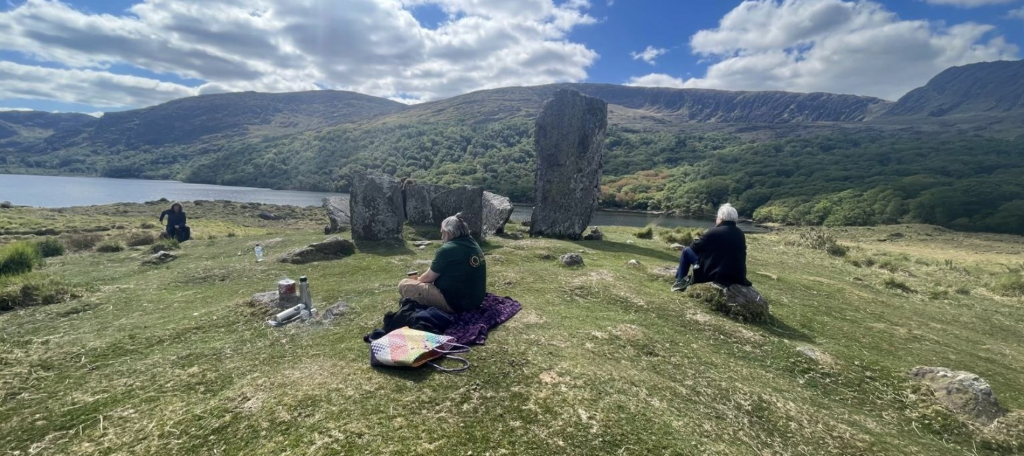
On our ancestral pilgrimages across Ireland’s wild countryside, we don’t just visit sacred sites, we walk them with intention and support. Alongside expert guides, there are skilled healers, shamans and druids who understand the spiritual landscape and invite ancestral presence with reverence. They are not here for spectacle or ceremony for its own sake. They hold space for quiet connection, guiding respectful acknowledgement of ancestors, inviting participants to feel the land’s memory, and opening the field for whatever wants to move or be recognised.
Sometimes a guide will pause beside a stone alignment and softly invite you to call in lineage names. Sometimes in a quiet hollow beside ancient cairns you’ll be asked simply to breathe with the land. These moments are gentle and grounded, like the wild Irish countryside itself, wind-swept fields, quiet stone walls, long views over hills that have been walked for millennia. There is no obligation to do anything dramatic. Just a respectful opening to let ancestral presence be felt and, for many, finally known.
This is a living, breathing connection, where the land sings, the body recognises home, and something ancient inside you remembers what paper cannot capture.
1. Loughcrew Cairns, Meath
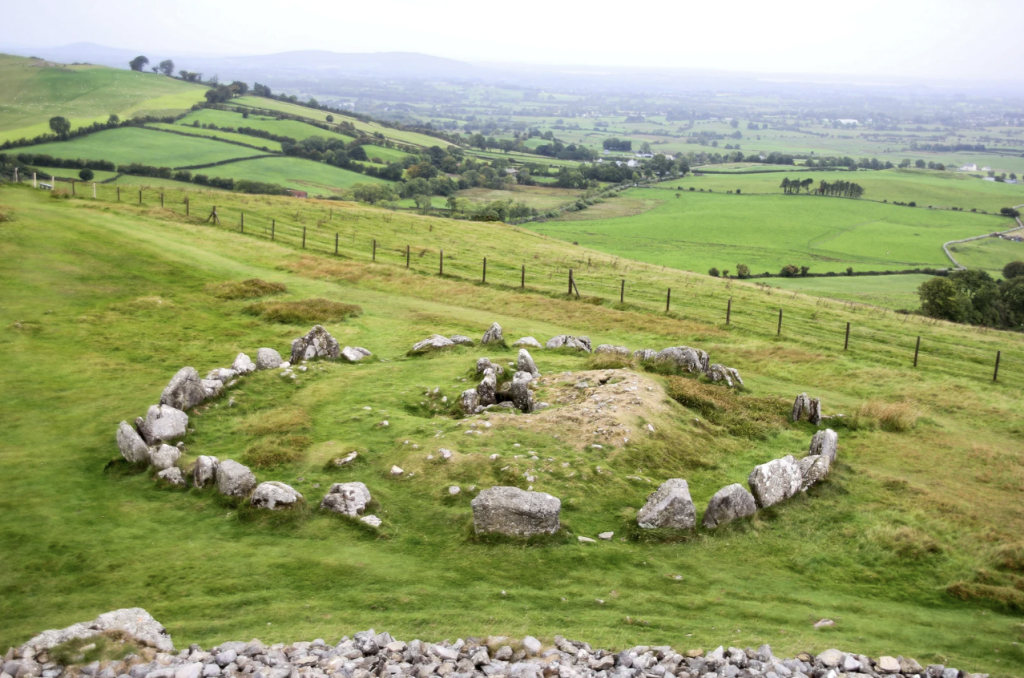
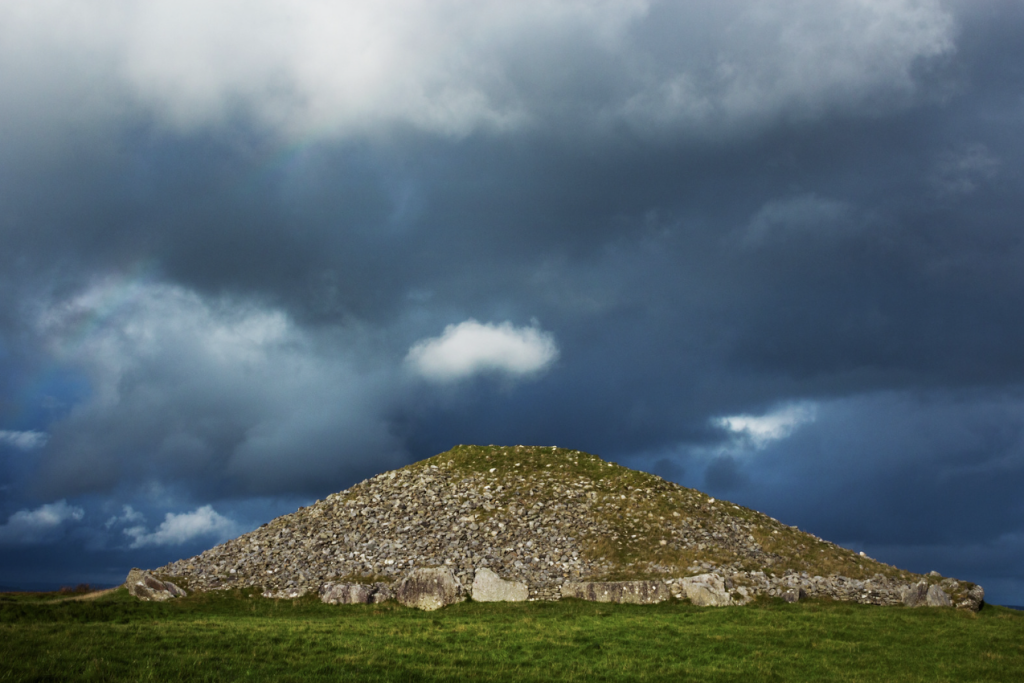
Older than the pyramids of Egypt. A Neolithic passage tomb aligned to the rising sun.
You climb through wild heather and wind across the Meath hills. The countryside opens around you in every direction. Patchwork fields. Stone walls. Sheep moving like small clouds across the land.
Inside the cairn, ancient carvings spiral across stone that has stood for over 5,000 years.
Many diaspora visitors feel something primal here. A remembering that goes beyond religion or history. This is ancestral memory before parish records, before surnames, before borders.
It is Ireland in its oldest form.
2. Lough Gur, Limerick
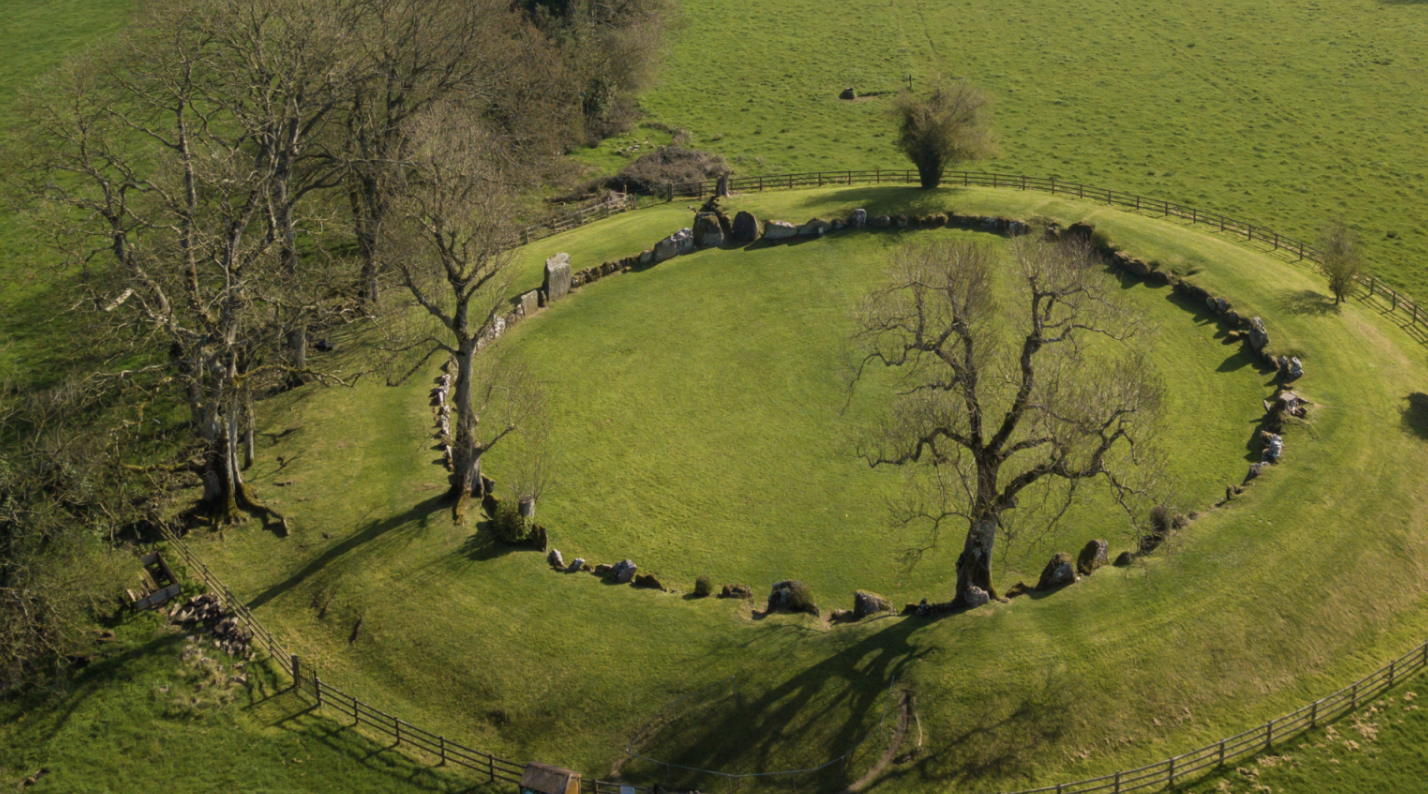
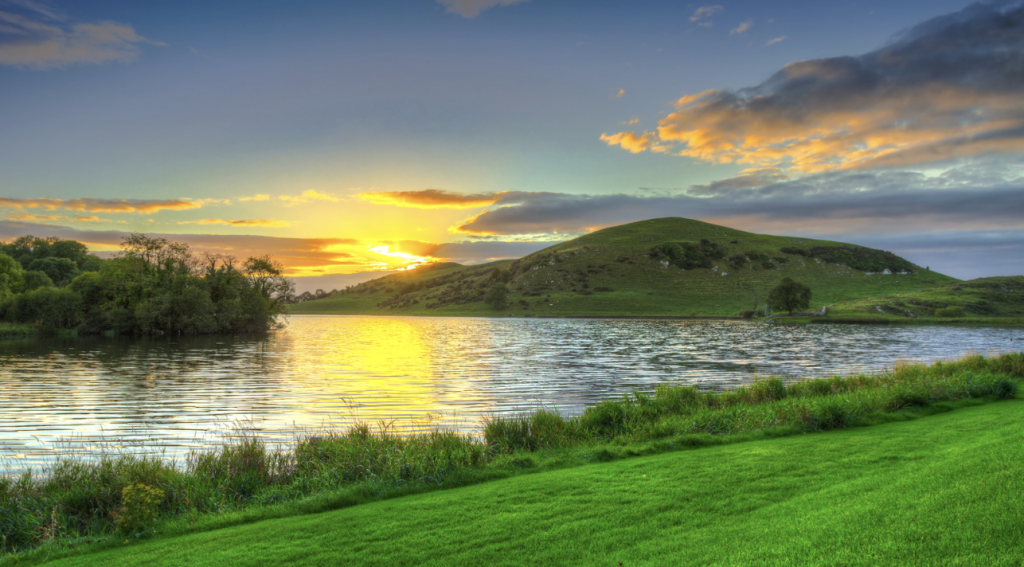
A powerful Bronze Age ritual landscape. Grange Stone Circle aligns with the summer solstice sunrise.
The lake holds a stillness that settles people quickly. The wild countryside around it feels both open and intimate. Many visitors find themselves unexpectedly emotional here.
3. Rock of Cashel, Tipperary
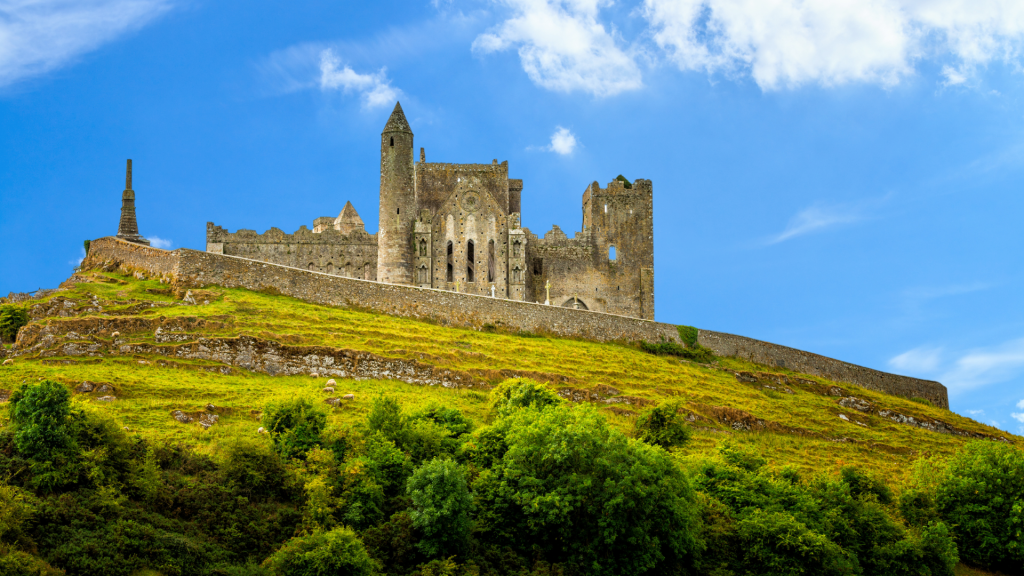
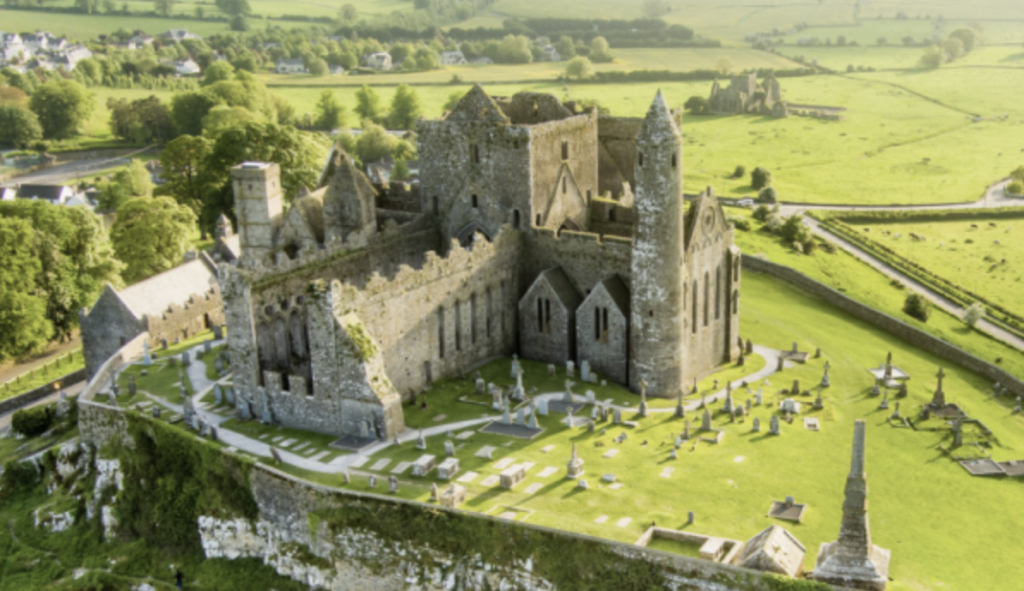
Layered with myth and ecclesiastical power. The merging of pagan and Christian Ireland is tangible. It represents the continuity of Irish identity through upheaval.
4. Drombeg Stone Circle, Cork
A Bronze Age alignment stone circle in Co. Cork known for its spiritual atmosphere and panoramic views of the wild countryside.
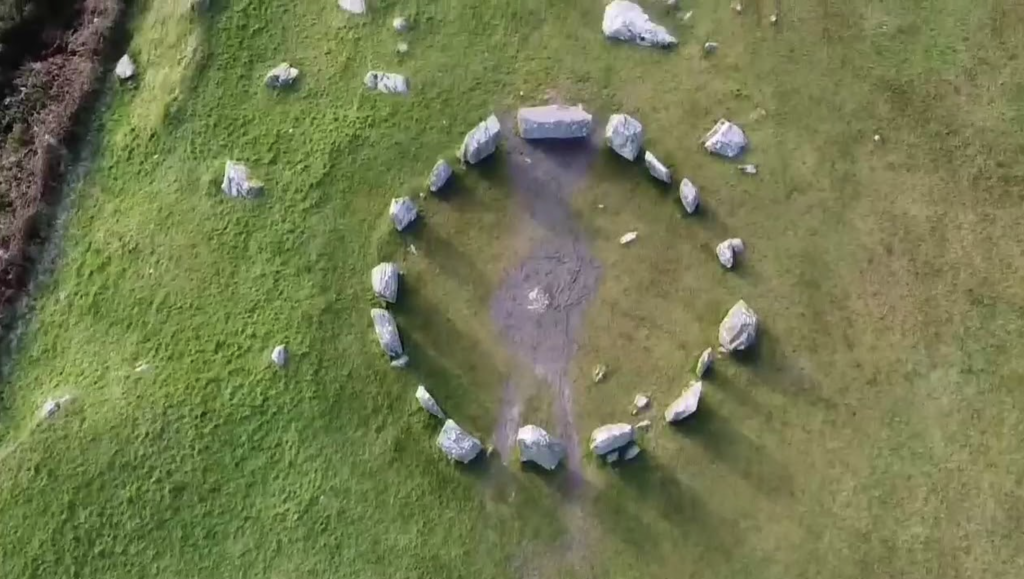
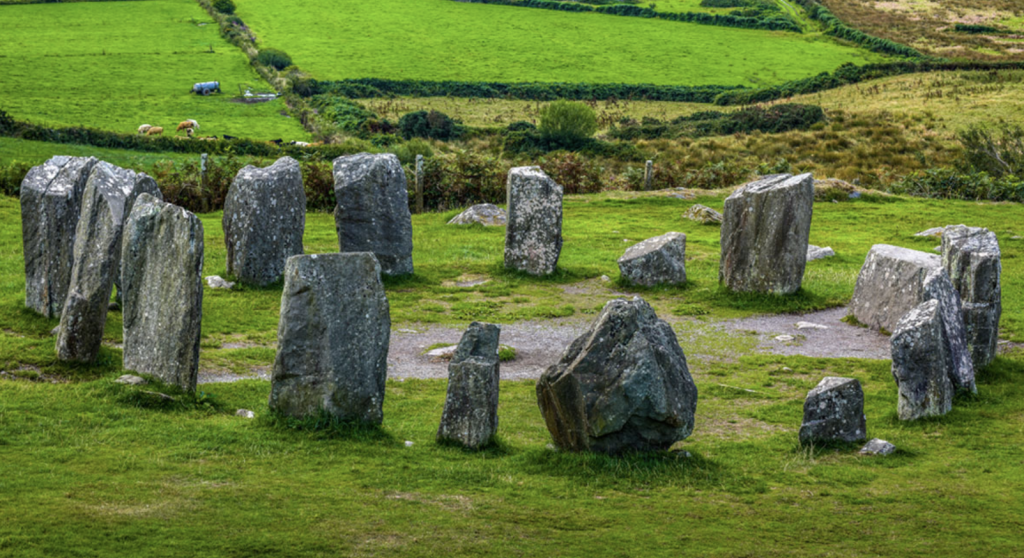
These are not tourist stops. They are places where the Irish countryside does its work quietly.
You drive narrow boreens lined with hawthorn. You pass abandoned cottages slowly returning to earth. You stand in wind that has crossed the Atlantic for centuries. And something inside you steadies.
Because before your ancestors boarded ships to America, Canada or Australia, they stood in landscapes like this. When visitors reconnect not only to documents but to stone, soil and sky, ancestral healing becomes embodied. The land is not a backdrop. It is the archive.
Walking the Irish Countryside of Your Ancestors
The most profound experiences happen off the main roads.
You stand in a field. You know your great great grandfather walked this soil. You feel wind off the Atlantic in Clare or smell peat smoke in Kerry.
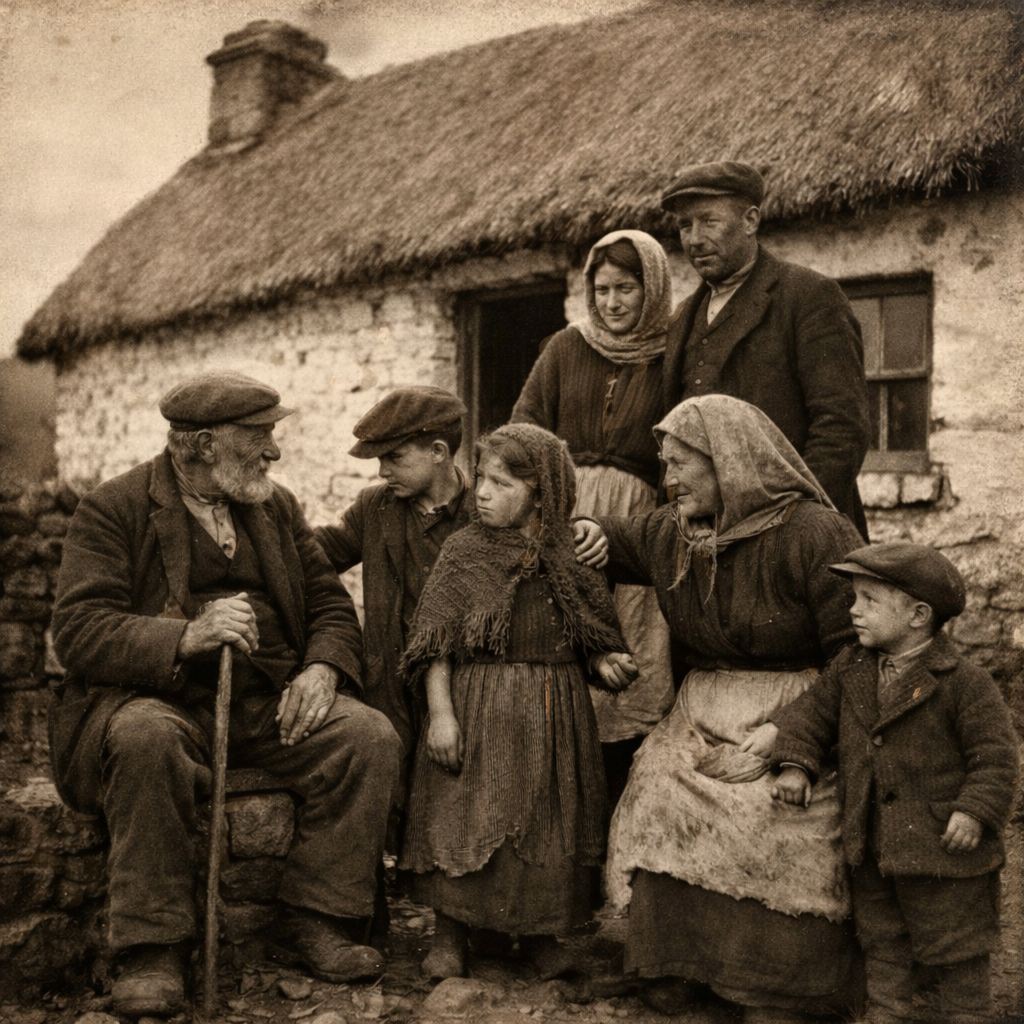
Often there are tears. I have watched strong American men fall silent beside collapsed stone cottages. I have seen Australian women kneel to touch the grass where their great grandmother left during the Famine. I have myself went to Cobh to see where my grandmother left on a ship for Boston, and where she returned many years later.
There is something about standing on ancestral land that regulates the nervous system. The body recognises belonging. It is not sentimental. It is cellular.
Ancestral Healing Tours in Ireland
Ancestral trauma is real. Famine. Emigration. Penal laws. Poverty. Silence. When diaspora visitors reconnect consciously, they are not just discovering history. They are:
Reclaiming identity
Releasing inherited shame
Restoring pride
Breaking generational disconnection
Many come searching for records. They leave with something far more powerful. A sense that they are not rootless.
Practical Tips for a Successful Irish Ancestry Trip
Do not try to cover the entire country. Focus on one county deeply.
Hire a local genealogist for one day. It saves months of guesswork.
Visit parish churches even if your family was Catholic or Protestant. Church registers are key.
Bring printed copies of documents. Rural areas may have limited internet.
Allow unstructured time for reflection. This is not a rushed itinerary.
Engage with local storytellers. Oral history fills gaps paper cannot.
Combine archive visits with sacred sites for emotional integration.
Search phrases to consider for SEO:
Irish ancestral tours
Tracing Irish roots in Ireland
Irish heritage travel
Irish genealogy vacation
Visit ancestral home Ireland
Irish diaspora pilgrimage
Irish sacred sites tour
What the Experience Feels Like
Let me tell you about a woman from the United States.
Her family story pointed to County Cork, but the paper trail was thin.
We did not find the exact ancestral cottage. We did not uncover a perfectly documented lineage. There was no neat genealogical bow.
And yet. As our bus crossed into Cork, something shifted.
She went quiet. Then she began to cry. Not loud. Not dramatic. Just steady tears rolling down her face as green fields opened around us.
She said later that as we entered the county boundary she heard, clear as day inside herself,
“Welcome back, daughter.”
No one else heard it but her and I. I turned to her and i saw the tears, and we shared what we had heard.
We drove toward an ancient stone circle outside of Kenmare, into Cork, and when she stepped onto the land, she knew.
Her people had walked this soil. Her bloodline had breathed this air. Her ancestors had known this wind.
Even without the perfect documentation, her body recognised home.
There was no ritual. No performance. No orchestrated moment.
Just silence. Just land. Just connection. She stood there, hands by her side, tears flowing. Not grief.
But Relief.
Relief that she was not rootless. Relief that the ache she had carried finally had context. Relief that somewhere in her nervous system, something had settled.
This is what many people do not understand about tracing Irish ancestry. It is not only about Irish genealogy records, parish registers, civil registration indexes or townland maps. It is about coherence.
When the body touches the land its lineage came from, something aligns. Even if the archive trail is incomplete. Even if the records were lost in the 1922 Four Courts fire.
The land still remembers. And the body remembers.
For diaspora visitors from America, Canada and Australia, this return is often the first time they feel fully located in themselves. For the diaspora, Ireland is not a postcard. It is a living archive.
Not Irish American.
Not Irish Australian.
Not Irish Canadian.
Just connected. Just belonging. And that is why ancestral healing in Ireland is so powerful. Because sometimes the healing does not come from a document. It comes from standing inside the story your bones already knew.
And yes. The tears come. Every time.
If you feel the pull to trace your Irish roots and walk the land with intention, explore our upcoming ancestral pilgrimages or arrange a call.
