There are moments when ordinary travel no longer answers the call. You do not want another coached itinerary, another list of landmarks, another week of looking without truly meeting a place. That is why celtic wheel of the year retreats speak so deeply to so many people now. They offer something older and more honest – a way to step into Ireland through ritual, season, story, thin places and sacred relationship.
This is not a tour. It is a pilgrimage shaped by the ancient turning points of the year. Each threshold invites a different kind of remembering, and each asks something different of the traveller.
Why Celtic wheel of the year retreats feel different
The Celtic Wheel of the Year marks the great seasonal festivals of Bealtaine, Lughnasa, Samhain and Imbolc, alongside the solstices and equinoxes that hold the wider rhythm of light and dark. In the old way, these were not decorative dates in a calendar. They were living thresholds. Times when the veil thinned, the land spoke more clearly, and community gathered in right relationship with fire, harvest, ancestors, fertility, rest and renewal.
A retreat held within this sacred framework does more than offer rest. It places your own life inside a meaningful pattern. If you arrive burnt out, grieving, questioning, or simply numb from too much noise, the season itself becomes part of the medicine. The landscape is not a backdrop. It is an active presence.
That is the deepest difference between a standard retreat and a pilgrimage based on the wheel. One may help you unwind. The Other may ask you to listen, release, honour, witness or begin again.
The seasons as initiation
Not every traveller is called to the same gate. One person comes seeking renewal and finds Bealtaine. Another feels the pull of the ancestors and is drawn to Samhain. Another needs the quiet spark of Imbolc, when what has been hidden begins to stir below the surface.
Bealtaine retreats
Bealtaine carries the energy of awakening, fertility, passion and sacred fire. In Ireland, this is a powerful time to work with blessing, creativity and embodiment. A Bealtaine pilgrimage may include ceremonial fire, visits to ancient ritual sites, blessings for the next chapter of life, and practices that invite you back into vitality.
For some, this season feels joyful and expansive. For others, it can be confronting. To welcome life fully often means noticing where you have gone cold, guarded or absent to yourself. A true Bealtaine retreat does not force brightness. It tends the fire carefully.
Samhain retreats
Samhain is often the most magnetic for spiritual seekers, and with good reason. This is the season of endings, ancestors, death mysteries and the thinning veil. In Ireland, Samhain is not theatre. It belongs to the land, to memory, and to the old understanding that what is unseen still shapes our lives.
A Samhain pilgrimage may include ancestor ritual, silence, storytelling, graveyard or sacred site visits, and ceremonial space for grief, release and communion. It can be profoundly moving. It can also be intense. If you are looking for a light wellness break, this may not be the threshold for you. But if you are ready to meet what has been waiting in the dark with reverence, it can be life changing.
Imbolc and Lughnasa
Imbolc speaks softly, but its medicine is strong. It is the season of first light, inner cleansing, devotion and the quiet return of hope. Those called to healing, prayer, writing or reorientation often find this time especially potent.
Lughnasa, by contrast, carries the field, the harvest, the body, the ripening of effort. It asks what is ready to be claimed, offered or completed. For people at a crossroads in work, service or vocation, Lughnasa can reveal what has truly come to fruit and what has not.
What to look for in celtic wheel of the year retreats
Not every retreat using Celtic language is rooted in living relationship with place. This matters. The wheel is not simply a theme to drape over generic wellness travel. In Ireland especially, these festivals arise from specific landscapes, stories and ceremonial lineages. The quality of the retreat depends on how deeply that is honoured.
Look for experiences grounded in the land itself. Sacred sites should not be treated as scenic stops or energetic commodities. They require guidance, context and respect. The right retreat will help you approach these places as a guest, not a consumer.
It also helps to notice who is leading. A meaningful pilgrimage often includes local wisdom keepers, ritual facilitators, healers, storytellers or guides who understand both the visible and invisible layers of the place. There should be a felt sense of guardianship, not performance.
Group size matters too. Small groups allow for intimacy, ceremony and genuine listening. If the experience is too large or too hurried, it becomes difficult to hold the spiritual depth these thresholds deserve.
And then there is the question many people forget to ask – what is the retreat asking of you? The best journeys are not built only around what you receive, but around how you participate. Pilgrimage is relational. You arrive not just to be served, but to witness, honour, and be changed.
Why Ireland holds these journeys so powerfully
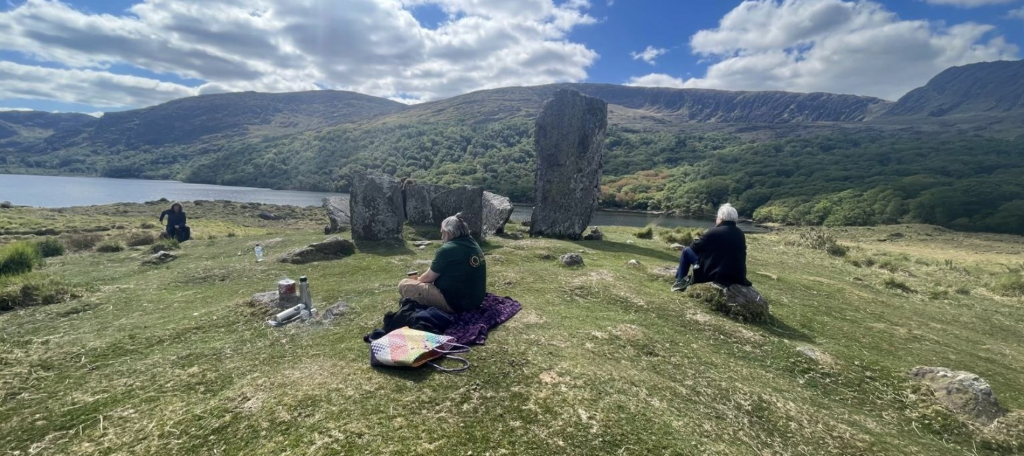
There are many places where seasonal spirituality can be practised. But Ireland carries a particular resonance for those drawn to the Celtic path. The land itself is dense with memory. Holy wells, ring forts, ancient hills, stone circles and liminal shorelines still hold the texture of an older cosmology. Myth has not fully left these places. In some regions, it still breathes close to the surface.
For members of the Irish diaspora, the call can feel intensely personal. What begins as curiosity often reveals itself as longing. A homecoming. A remembering. Not always to a neat ancestral story, but to a deeper sense of belonging that modern life has made difficult to reach.
For others with no direct Irish lineage, the connection may come through spiritual affinity rather than bloodline. That too can be real, though it asks humility. Ireland is not an abstract symbol of mysticism. It is a living country, with local communities, living traditions and complex histories. The most respectful retreats understand this balance between spiritual openness and rooted integrity.
What transformation really looks like
People often ask what they will get from a seasonal pilgrimage. The truthful answer is that it depends on what you are willing to meet. One person leaves with clarity. Another with grief finally moving. Another with a quieter nervous system and a renewed trust in ritual. Another with no dramatic revelation at all, but a subtle reordering that continues for months.
This work is not always dramatic. Sometimes the shift comes from standing on sacred ground at dawn and feeling, perhaps for the first time in years, that you are no longer split from yourself. Sometimes it comes through story, through song, through shared silence, through tears you did not plan to shed.
A good retreat does not manufacture transformation. It creates the conditions in which something true can happen.
That is why the strongest celtic wheel of the year retreats are carefully held rather than overpacked. There is space to walk, to pray, to write, to rest, to integrate. There is reverence for mystery. There is also structure. The container matters. Without it, powerful places and rituals can become overwhelming or diffuse.
At Ancient Spiritual Tours Ireland, this is understood as sacred travel rather than tourism – journeys shaped by ritual, story, seasonal thresholds and deep listening to the land.
Choosing the right retreat for where you are now
If you feel raw, overextended or spiritually dry, start by asking not where you want to go, but what season your soul is actually in. You may be booking in summer and yet inwardly living in Samhain. You may think you need action, when what you really need is an Imbolc kindling or an autumn release.
Be honest about your capacity. Some travellers are ready for intense ceremonial work. Others need a gentler re-entry into sacred practice. Neither is better. What matters is alignment.
It is also worth considering whether you want a group pilgrimage or a custom journey. Group work can be powerful because the circle itself becomes part of the teaching. A bespoke retreat offers more privacy and a pace tailored to your own process. Again, it depends. The right choice is the one that allows you to be fully present, not performatively spiritual.
The wheel keeps turning whether we pay attention or not. But when we choose to step into it consciously, with reverence and guidance, travel becomes something else entirely. Not escape. Not entertainment. A rite of passage shaped by season, story and sacred ground.
If you feel the call, trust that you do not need to have every reason neatly explained. Some journeys begin because the land has already started speaking, and your only task is to answer with care.